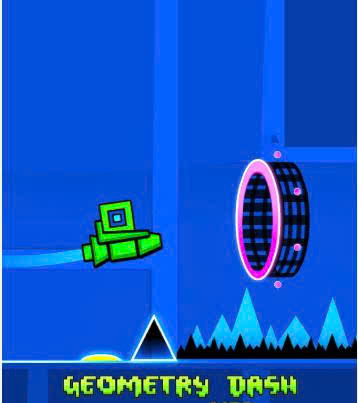
There's a special kind of satisfaction that comes from landing a jump you've been struggling with for an hour. Your fingers finally sync with the rhythm, the spikes slide past harmlessly beneath you, and the music swells just in time. If you've ever wondered what it feels like to nail one of these moments, this guide is for you. We'll use Geometry Dash as our main example, since it's one of the most approachable and rewarding games for experiencing precise, rhythm-based jumping.
At its core, Geometry Dash is a side-scrolling platformer where your character, a small geometric cube, moves forward automatically. Your only job is to jump, fly, or flip over obstacles at exactly the right moment. There's no running backward, no inventory to manage, and no complicated controls to memorize. You tap or hold a single button, and everything else depends on timing.
What makes the jumps so interesting is that they're built around the soundtrack. Many levels are designed so that obstacles appear in sync with the beat. Once you start noticing the rhythm, the level stops feeling like a random gauntlet of spikes and starts feeling like a piece of music you're playing with your reflexes.
The game also offers different vehicle modes, each with its own jumping style. The cube hops in discrete bursts, the ship glides and requires constant small taps to climb, the ball flips gravity with each press, and the wave zigzags diagonally. Each mode changes how you think about a jump, so a gap that felt easy as a cube might require a completely different approach as a ship.
Watch the ground, not your character. New players often stare at their cube and react only once an obstacle is already on top of them. Instead, let your eyes lead about a second ahead, scanning the upcoming spikes and platforms. Your hands will follow what your eyes have already processed.
Listen to the music. Try tapping along to the beat during a practice run without worrying about obstacles. Once the rhythm settles into your muscle memory, you'll often press the button almost automatically when the drop or snare hits.
Break levels into sections. Rather than attempting a full level from start to finish every time, practice the hardest stretch on its own. Many levels have a single difficult sequence, and mastering that section makes the rest feel much more manageable.
Use practice mode. The checkpoints in practice mode let you learn a tricky jump without losing all your progress. You can place checkpoints right before a difficult section and experiment until the timing feels natural.
Stay relaxed. Tension is the enemy of precise timing. Holding the controller or keyboard too tightly, or hunching forward in frustration, tends to make your inputs sloppy. Take short breaks when you feel yourself getting stiff.
Accept the restarts. Failing is part of the process, and every attempt teaches you something about the level's rhythm. Players who treat each death as a small lesson tend to improve much faster than those who get discouraged.
The geometry jump is a wonderful example of how simple mechanics can produce deep, satisfying challenges. With one button, a steady eye, and a good ear for rhythm, you can experience moments of real focus and flow. Start with an easier level, pay attention to the music, and give yourself time to build the feel for each vehicle mode. Before long, the jumps that once seemed impossible will become some of the most enjoyable parts of your day. Happy jumping, and enjoy the climb.